Do Lab Grown Diamonds Scratch or Chip? [Answered]
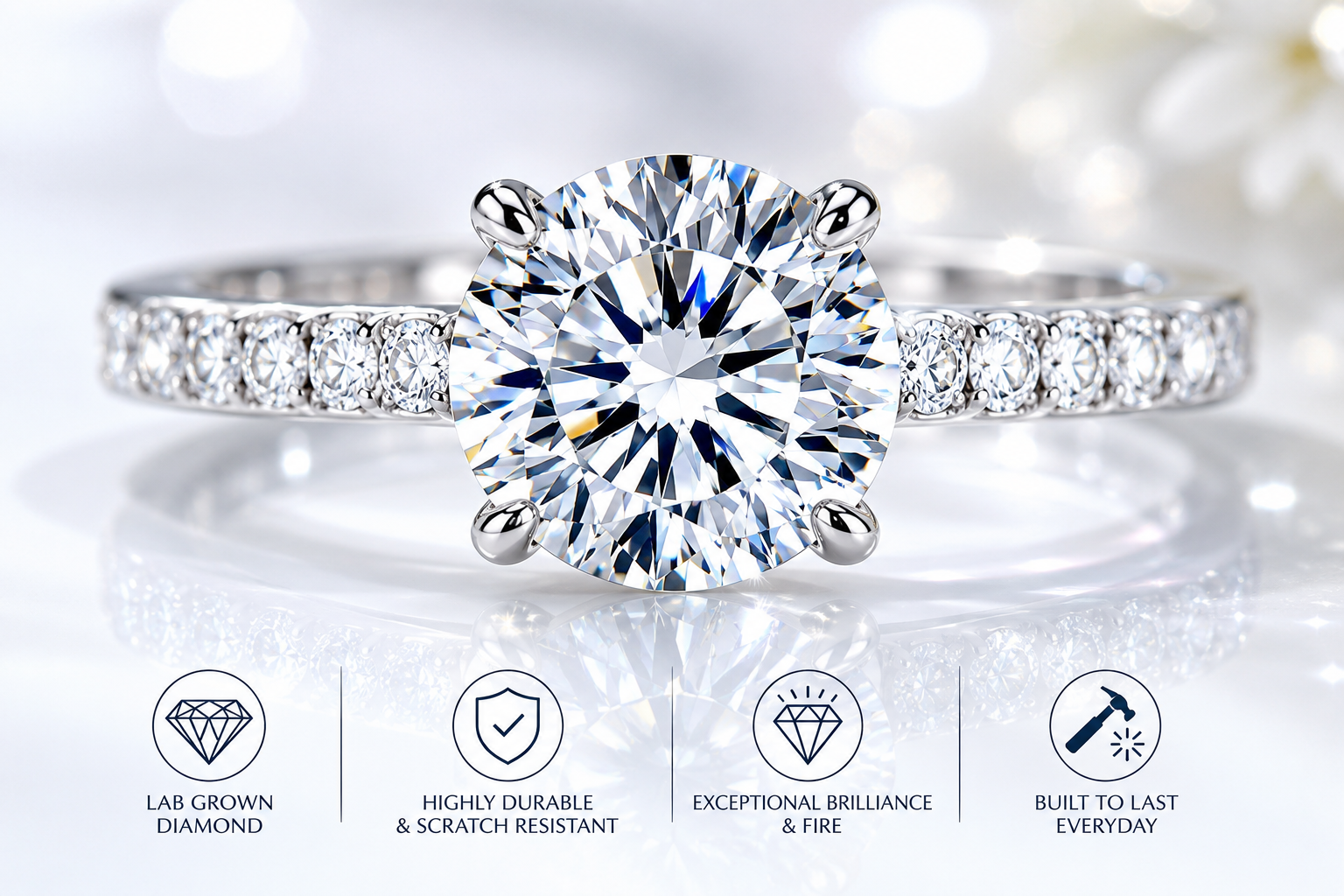
Lab grown diamonds have become one of the most sought-after choices for engagement rings, wedding bands, earrings, and fine jewelry. They offer the same beauty, brilliance, and durability as natural diamonds while providing a more sustainable and affordable option.
One of the most common questions buyers ask is:
Do lab grown diamonds scratch or chip?
The answer is simple: Lab grown diamonds are extremely resistant to scratches, but like all diamonds, they can chip under certain circumstances. Understanding the difference between hardness and toughness can help you better protect your diamond jewelry and ensure it lasts for generations.
Are Lab Grown Diamonds Real Diamonds?
Yes. Lab grown diamonds are real diamonds.
They have the same:
- Chemical composition
- Physical properties
- Crystal structure
- Optical brilliance
As a result, lab grown diamonds look, sparkle, and perform exactly like natural diamonds. The only difference is that they are created in a controlled laboratory environment rather than being mined from the earth.
How Hard Are Lab Grown Diamonds?
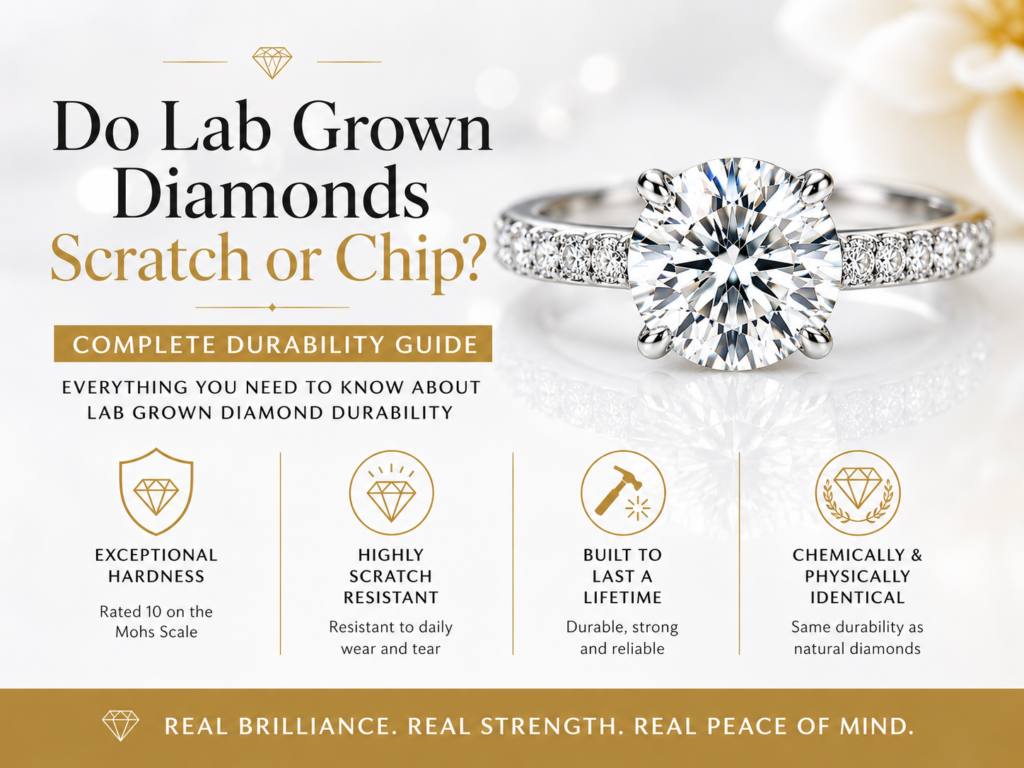
Lab grown diamonds rank 10 on the Mohs Hardness Scale, making them the hardest gemstone available for jewelry.
The Mohs scale measures a mineral’s ability to resist scratches:
| Gemstone | Mohs Hardness |
|---|---|
| Quartz | 7 |
| Topaz | 8 |
| Sapphire | 9 |
| Ruby | 9 |
| Diamond | 10 |
Because lab grown diamonds have the same crystal structure as natural diamonds, they offer identical hardness and scratch resistance.
Do Lab Grown Diamonds Scratch Easily?
No.
Lab grown diamonds are highly resistant to scratching and are ideal for everyday wear. Their exceptional hardness allows them to maintain their polished surface and brilliance for many years.
Unlike softer gemstones, lab grown diamonds can withstand daily exposure to:
- Clothing
- Household surfaces
- Cosmetics
- Everyday activities
This makes them an excellent choice for engagement rings and jewelry worn regularly.
Why Are Lab Grown Diamonds So Scratch Resistant?
Diamonds are composed of carbon atoms bonded together in an extremely strong crystal lattice structure.
This unique arrangement gives diamonds:
✔ Outstanding durability
✔ Exceptional wear resistance
✔ Long-lasting brilliance
✔ Superior scratch resistance
In fact, only another diamond can effectively scratch a diamond.
Can Lab Grown Diamonds Chip?
Yes.
Although diamonds are the hardest gemstone, they are not indestructible.
A diamond can chip if it receives a strong impact at a vulnerable point. This applies equally to both natural and lab grown diamonds.
Hardness vs Toughness
Many people assume that hardness means a diamond cannot break. However, hardness and toughness are different properties.
Hardness refers to resistance against scratching.
Toughness refers to resistance against breaking or chipping.
Diamonds are extremely hard but can still chip if subjected to a sharp blow.
What Causes a Lab Grown Diamond to Chip?
Strong Impacts
Dropping a diamond ring onto a hard surface or hitting it against metal, stone, or concrete can cause damage.
Pointed Diamond Shapes
Certain diamond cuts have exposed points that are more vulnerable to chipping, including:
- Pear Cut
- Marquise Cut
- Princess Cut
- Heart Cut
These shapes often benefit from protective settings.
Contact with Other Diamonds
Diamonds can scratch or damage each other when stored together without proper protection.
Damaged or Loose Settings
A worn-out setting can expose the diamond to accidental impacts and increase the risk of damage.
Are Lab Grown Diamonds as Durable as Natural Diamonds?
Absolutely.
Lab grown diamonds have the same durability as natural diamonds because they share the same chemical and physical properties.
There is no difference in:
- Hardness
- Strength
- Scratch resistance
- Everyday wearability
Both types of diamonds can last a lifetime when properly cared for.
Do Lab Grown Diamonds Lose Their Sparkle?
No.
Lab grown diamonds do not become cloudy or lose their brilliance over time.
If a diamond appears dull, it is usually due to:
- Dirt buildup
- Skin oils
- Lotions
- Soap residue
Regular cleaning will restore its original sparkle.
How to Protect a Lab Grown Diamond
Remove Jewelry During Physical Activities
Take off your jewelry when:
- Exercising
- Heavy lifting
- Gardening
- Home repairs
- Sports activities
Store Jewelry Properly
Keep diamond jewelry in separate compartments or soft pouches to prevent contact with other gemstones and diamonds.
Clean Your Diamond Regularly
Use:
- Warm water
- Mild dish soap
- Soft toothbrush
Avoid harsh chemicals or abrasive cleaners.
Inspect Settings Annually
Professional inspections help ensure prongs remain secure and prevent accidental stone loss or damage.
Choose Protective Settings
For diamonds with pointed corners, consider:
- Bezel settings
- V-prong settings
- Halo settings
These settings provide additional protection from accidental impacts.
Quick Answer: Do Lab Grown Diamonds Scratch or Chip?
| Question | Answer |
|---|---|
| Do lab grown diamonds scratch easily? | No |
| Can lab grown diamonds chip? | Yes, under strong impact |
| Are they as durable as natural diamonds? | Yes |
| Do they lose sparkle over time? | No |
| Suitable for everyday wear? | Yes |
| Mohs Hardness Rating | 10/10 |
Final Verdict
Lab grown diamonds are one of the most durable gemstones available. Their perfect 10/10 hardness rating makes them highly resistant to scratches, making them ideal for engagement rings, wedding bands, earrings, and everyday jewelry.
While they can chip if exposed to a significant impact, this is true for all diamonds. With proper care, secure settings, and routine maintenance, a lab grown diamond can maintain its beauty, brilliance, and durability for generations.
Whether you’re shopping for a lab grown diamond engagement ring or fine diamond jewelry, you can feel confident knowing that your diamond is built to last a lifetime.
Frequently Asked Questions (FAQs)
1. Do lab grown diamonds scratch easily?
No. Lab grown diamonds rank 10 on the Mohs Hardness Scale, making them highly resistant to scratches. They are one of the hardest materials used in jewelry.
2. Can lab grown diamonds chip?
Yes. Although lab grown diamonds are extremely hard, they can chip if they receive a strong impact, especially along pointed edges or corners.
3. Are lab grown diamonds as durable as natural diamonds?
Yes. Lab grown diamonds have the same physical, chemical, and optical properties as natural diamonds, including identical durability and hardness.
4. Do lab grown diamonds lose their sparkle over time?
No. Lab grown diamonds do not become cloudy or lose their brilliance. Regular cleaning helps maintain their sparkle by removing dirt, oils, and residue.
5. Can you wear a lab grown diamond every day?
Absolutely. Lab grown diamonds are durable enough for everyday wear and are a popular choice for engagement rings, wedding bands, and fine jewelry.
6. What can scratch a lab grown diamond?
Only another diamond can effectively scratch a lab grown diamond. Most everyday materials cannot damage its surface.
7. Which diamond shapes are most likely to chip?
Diamond shapes with pointed corners, such as pear, marquise, princess, and heart cuts, are more vulnerable to chipping if struck at the tip.
8. How do I protect my lab grown diamond from damage?
Choose a secure setting, avoid wearing it during heavy physical activities, store it separately from other jewelry, and have it inspected regularly by a jeweler.
9. Are lab grown diamonds suitable for engagement rings?
Yes. Their exceptional hardness and durability make lab grown diamonds an excellent choice for engagement rings that are worn daily.
10. Do lab grown diamonds last forever?
With proper care and maintenance, a lab grown diamond can last for generations and maintain its beauty, brilliance, and durability for a lifetime.
11. Can lab grown diamonds break?
While rare, lab grown diamonds can break or chip if exposed to a significant impact. This is true for both lab grown and natural diamonds.
12. Are lab grown diamonds worth buying?
Yes. Lab grown diamonds offer the same beauty, durability, and sparkle as natural diamonds while typically costing significantly less and providing a more sustainable choice.


![How to Make Temu Forget Device? [2025]](https://temufinds.com/wp-content/uploads/2024/08/How-to-Make-Temu-Forget-Device-768x432.jpg)
![When Did Temu Increase Minimum Order? [2025]](https://temufinds.com/wp-content/uploads/2025/05/temu-marketing-strategy.jpg)
![Does Temu Accept Venmo? Explained [2025]](https://temufinds.com/wp-content/uploads/2024/08/Does-Temu-Accept-Venmo-768x432.jpg)
![9 Top Brands Like Swarovski To Buy Statement Pieces! [2025]](https://temufinds.com/wp-content/uploads/2024/08/Brands-like-Swarvoski-768x432.jpg)